Iconic Design Tables That Made History in Interior Design
A curated selection of iconic design tables that have stood the test of time, becoming timeless symbols of style and innovation.
June 2025
Contact Us
book a visit
Location
A curated selection of iconic design tables that have stood the test of time, becoming timeless symbols of style and innovation.
Some tables are not just functional furniture, but true masterpieces of design. What sets them apart is their remarkable ability to adapt to evolving spaces, changing needs, and shifting aesthetic preferences. In the world of interior design, the table plays a central role: it must endure over time while reflecting new lifestyles. Leading architects and renowned designers have embraced this challenge, creating iconic pieces that blend innovation, beauty, and functionality.
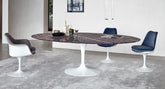
Designed in the 1940s and produced in the 1950s, the Tulip table by Eero Saarinen is famous for its slender central base that resembles the stem of a flower. Created for Knoll, it became iconic thanks to appearances in futuristic sets like Star Trek. With its single pedestal leg, it eliminates traditional legs to offer visual clarity and enhanced comfort.


Winner of the 1987 Compasso d’Oro, the Ragno table is a sculptural piece crafted in curved transparent or extralight glass, 15 mm thick. Available in rectangular and round versions, it stands out for its elegant and fluid lines. Perfect for both home and office interiors, it reflects Vittorio Livi’s design ethos: lightness and innovation.


Originally designed in 1928 by Le Corbusier with Pierre Jeanneret and Charlotte Perriand, the LC6 is now produced by Cassina. First presented at the Salon d’Automne in Paris in 1929, the table draws inspiration from aviation, with a solid metal base and a crystal top that appears to float—a perfect blend of modernist function and visual lightness.


A product of the 1970s Radical Design movement, the Quaderna table was designed by Superstudio for Zanotta. Based on the “Istogrammi” project, its orthogonal grid structure forms geometric volumes clad in squared white laminate. Tables, beds, and consoles become abstract architectural elements. Even today, Quaderna is a powerful symbol of conceptual and rebellious design.


Designed in 1968 by Italian architect Carlo Scarpa, the Doge table was the first product from Simon (now part of Cassina). Its base, made of steel or aluminum with visible burnished screws, supports a glass top. The piece embodies the Ultrarationalist movement and merges structural rigor with exquisite detailing, typical of Scarpa’s work across architecture and design.


Part of the 1962 Platner Collection, the Platner table is a functional work of art. Composed of vertically and horizontally arranged nickel-plated steel rods with a clear lacquer finish, it features a beveled glass top. Its refined, harmonious look makes it a standout piece for both residential and professional spaces.


These design tables are more than functional pieces—they're cultural landmarks. Each model reflects a specific era, a distinctive design philosophy, and a unique way of interpreting space. Exploring these iconic tables means understanding the evolution of modern design and how furniture continues to serve as a lasting expression of creativity and innovation.